
Introduction
If you have seen the numbers 777 or 3-7-77 associated with Montana, you may wonder what they mean and why they are connected to the state’s history. The numbers have a fascinating background involving frontier communities, vigilante groups, and the early days of law enforcement.
The symbol most closely associated with Montana is 3-7-77, not simply 777. It is a historical warning linked to vigilantes who operated in Montana during the 19th century. Although historians have proposed several explanations for the exact numbers, their original meaning remains uncertain. The Montana Historical Society documents the symbol’s use as a warning intended to frighten or drive away its targets.
Today, 3-7-77 is widely recognized as part of Montana’s historical identity. It is also associated with the Montana Highway Patrol, which uses the symbol in honor of the state’s early law enforcement history.
Understanding the numbers requires looking beyond the digits themselves. Their story reveals how communities dealt with crime, how unofficial justice could become violent, and how a mysterious historical symbol survived into modern times.
What Does 777 Mean in Montana?
In Montana, the number 777 is commonly encountered as part of the longer sequence 3-7-77. When people ask what 777 means in Montana, they are often referring to this distinctive historical symbol.
The sequence is associated with vigilantes who used it as a threatening message in Montana’s frontier communities. It was intended to warn people they considered criminals or troublemakers that they should leave or face possible violence.
However, there is an important distinction between the symbol’s documented historical use and the theories about its exact numerical meaning.
The historical record supports the connection between 3-7-77 and vigilante warnings. It does not establish one universally accepted explanation for why those particular numbers were chosen.
The simplest way to understand the symbol is:
- 3-7-77: A historical vigilante warning associated with Montana.
- 777: The final three digits of that sequence, which people sometimes ask about separately.
- Modern significance: A recognizable symbol connected to Montana’s frontier past and law enforcement heritage.
If you have seen the numbers on a uniform, vehicle, or historical display, the full sequence is the most useful clue to their meaning.
The History Behind Montana’s 3-7-77 Symbol
To understand the symbol, it helps to look at Montana during the gold rush era of the 1860s and the decades that followed.
Mining discoveries brought people into settlements such as Bannack and Virginia City. These communities grew quickly, and maintaining public order was difficult in a region where formal law enforcement and government services were limited.
Crime, theft, and violent disputes created serious concerns. Some residents responded by organizing vigilante groups that attempted to punish people they believed were responsible for crimes.
These groups sometimes operated outside established legal procedures. Although supporters viewed vigilantes as a response to lawlessness, their actions also included intimidation, executions, and other forms of extrajudicial violence.
The Montana Historical Society describes the early vigilante movement as an important part of the state’s gold and silver boom history. Its educational material also documents the use of 3-7-77 as a warning connected to this period.
What Were Montana’s Vigilantes?
Vigilantes were private individuals who took it upon themselves to investigate, punish, or remove people they considered threats to their communities.
In early Montana, some residents believed existing authorities could not adequately control crime in remote mining settlements. Vigilante groups emerged in response, particularly around Bannack and Virginia City.
However, vigilante justice did not offer the protections of a fair legal system. Accusations could lead to punishment without the safeguards of a formal trial, and innocent people could be placed at risk.
The history of these groups is therefore complicated. Their activities reflected the challenges of frontier life, but they also demonstrated the dangers of allowing private citizens to exercise unchecked power.
How Was 3-7-77 Used?
The numbers were associated with warnings directed at people whom vigilantes wanted to frighten or force out of an area.
Historical accounts describe the sequence appearing on notices and other surfaces as a recognizable threat. The warning could carry the implication that the targeted person should leave or face violent consequences.
The numbers later became part of Montana’s wider historical memory. However, the precise origin of the sequence remains debated, and it would be misleading to present any single explanation as proven beyond doubt.
Why Does Nobody Know Exactly What 3-7-77 Means?
The mystery surrounding the numbers is a major reason people continue to search for their meaning.
Historians have documented the symbol’s association with vigilante activity, but explaining how it was first created is more difficult. Different interpretations have emerged over time, and some are repeated more often than the available evidence justifies.
The Montana Historical Society discusses several proposed explanations while making clear that the origin is disputed.
Theory One: A Deadline to Leave Town
One popular explanation suggests that the numbers represented a specific period of time given to a targeted person to leave town.
The theory is often expressed as three hours, seven minutes, and seventy-seven seconds. It is memorable because it turns the numbers into a countdown.
However, this interpretation is not an established historical fact. It should be understood as a theory rather than a confirmed definition.
Theory Two: The Dimensions of a Grave
Another frequently repeated explanation claims that the numbers refer to grave dimensions: three feet wide, seven feet long, and seventy-seven inches deep.
This interpretation connects the symbol with the deadly threats associated with vigilante activity.
Although the theory appears in discussions of Montana history, its popularity does not establish that it was the original meaning. The historical evidence does not settle the question conclusively.
Theory Three: A Stagecoach Ticket
A different theory connects the numbers with travel out of town.
In this version, a person was supposedly expected to purchase a $3 ticket for a 7 a.m. stagecoach journey covering approximately 77 miles from Helena to Butte.
This explanation offers a practical interpretation of the sequence, but it also remains disputed.
Theory Four: A Connection to Freemasonry
Some historical interpretations connect 3-7-77 with Freemasonry, a fraternal organization whose members were involved in Montana’s early communities.
The Montana Historical Society’s educational material discusses theories linking the numbers to Masonic meetings, membership, and the symbolic significance of seven.
This theory is particularly relevant because some early Montana vigilantes had Masonic connections. Nevertheless, the precise relationship between Freemasonry and the original selection of the numbers remains a matter of historical interpretation.
Which Explanation Is Correct?
There is no universally accepted answer.
The most reliable conclusion is that 3-7-77 became a recognizable vigilante warning in Montana, while the precise meaning of the individual digits remains uncertain.
Readers should be cautious about websites or social media posts that state one theory as definite fact without acknowledging the historical debate.
Why Does the Montana Highway Patrol Use 3-7-77?
One of the most visible modern associations with the numbers is the Montana Highway Patrol.
The symbol appears in the patrol’s insignia and is linked to the state’s early history of law enforcement. A 2025 report from Montana Right Now quoted a Montana Highway Patrol official explaining that the numbers were incorporated into the patrol’s identity in 1956 to honor those who served before the modern organization.
This modern use is different from the original vigilante warning.
In the 19th century, the numbers carried threatening associations. In the context of the highway patrol, they serve as a historical emblem connected to the state’s law enforcement heritage.
That distinction matters because the symbol’s history is not simply a story of crime prevention. It is also a reminder of the difference between organized law enforcement and private groups that acted outside the law.
Does 3-7-77 Mean the Highway Patrol Is a Vigilante Group?
No. The historical association does not mean that the Montana Highway Patrol operates as a vigilante organization.
The patrol is a modern law enforcement agency. Its use of the symbol is commemorative, reflecting an interpretation of Montana’s law enforcement history.
The original vigilantes and today’s highway patrol belong to different historical and legal contexts. The presence of the numbers on a uniform should not be taken as evidence that the modern agency endorses extrajudicial punishment.
What Does 3-7-77 Tell Us About Montana’s History?
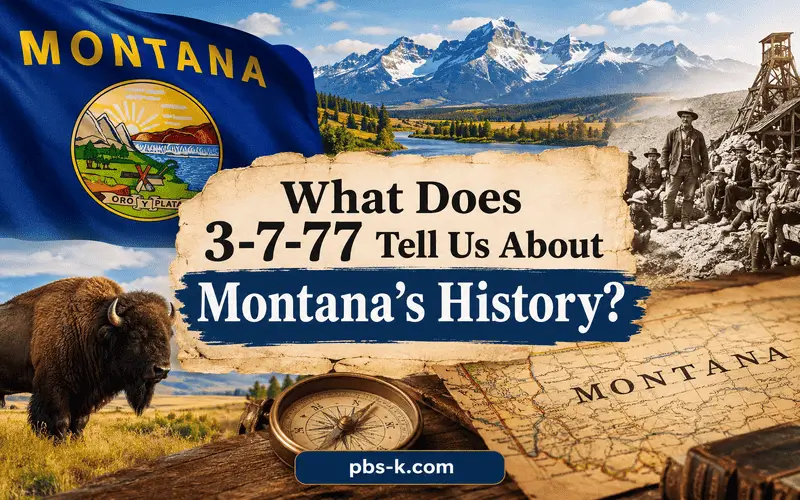
The symbol offers a useful starting point for understanding the challenges faced by early Montana communities.
During the mining boom, people settled in areas where government institutions were still developing. The demand for safety and order was real, but the responses were not always lawful or fair.
The story of 3-7-77 highlights several important themes.
- Frontier justice: Early communities sometimes relied on unofficial groups when formal institutions were weak.
- The dangers of vigilantism: Private punishment could lead to intimidation, wrongful accusations, and executions without proper legal safeguards.
- The development of government: Montana’s growing settlements needed more reliable legal institutions and accountable public services.
- Historical memory: Symbols can survive long after their original context has changed, taking on new meanings for later generations.
The history also shows why historical symbols need context. Recognizing 3-7-77 is one thing; understanding the violence and uncertainty surrounding its origins is another.
The Montana Historical Society’s educational resources provide further background on the gold rush era, vigilante groups, and the development of Montana Territory.
How to Research the Meaning of 3-7-77
If you want to learn more about the symbol, start with sources that distinguish documented events from later interpretations.
Here is a practical approach.
- Start with the Montana Historical Society. Its educational resources explain the vigilante period and summarize the major theories about the numbers.
- Look for historical context. Read about Bannack, Virginia City, and Montana’s gold and silver boom to understand why vigilante groups emerged.
- Compare competing explanations. Check whether a source identifies a theory as speculation or presents it as an established fact.
- Examine modern usage separately. If you saw the numbers on a highway patrol uniform, look for information about the patrol’s insignia and institutional history.
- Avoid assuming that repetition proves a claim. A story repeated across many websites may still lack conclusive historical evidence.
For further reading, the Montana Historical Society’s page on 3-7-77 is a useful starting point.
These steps help separate what historians know about the symbol’s use from what remains uncertain about its origin.
FAQs
What does 777 mean in Montana?
The number 777 is often searched as a reference to Montana’s better-known 3-7-77 symbol. That sequence is associated with historical vigilante warnings. The exact original meaning of the digits remains uncertain.
What does 3-7-77 mean on Montana Highway Patrol uniforms?
The numbers are a historical emblem connected to Montana’s frontier past. The Montana Highway Patrol adopted the symbol as part of its identity to honor earlier generations of law enforcement, according to a 2025 report quoting a patrol official.
Does 3-7-77 mean three hours, seven minutes, and seventy-seven seconds?
That is one popular theory. However, historians have not established it as the definitive meaning of the symbol. It should be treated as an interpretation rather than a proven fact.
Does 3-7-77 represent the dimensions of a grave?
Another popular theory suggests that the numbers describe a grave measuring three feet by seven feet by seventy-seven inches. This explanation is frequently repeated, but its status as the original meaning remains unconfirmed.
Who used 3-7-77 in Montana?
Vigilantes in Montana’s frontier communities used the sequence as a warning associated with intimidation and threats of violence. The symbol later became part of the state’s historical identity.
Is 3-7-77 still used today?
Yes. The symbol remains recognizable in Montana and is associated with the Montana Highway Patrol’s insignia. Its modern commemorative use differs from its historical association with vigilante threats.
Is 777 Montana’s telephone area code?
No. Montana’s established telephone area code is 406. The number 777 is not the state’s area code. The Montana Public Service Commission confirms the state’s association with the 406 area code.
Why is the meaning of 3-7-77 still debated?
The symbol’s historical use as a warning is documented, but surviving evidence has not conclusively established why its creators chose those particular numbers. Several explanations developed over time, and no single theory has gained universal acceptance among historians.
Conclusion
The answer to “What does 777 mean in Montana?” is best understood through the historical symbol 3-7-77. The sequence originated as a warning associated with Montana’s 19th-century vigilantes and later became a recognizable emblem of the state’s frontier heritage.
Although theories connect the numbers to deadlines, grave dimensions, stagecoach travel, and Freemasonry, the precise original meaning remains uncertain. The most useful next step is to consult the Montana Historical Society’s resources to explore the evidence and distinguish historical facts from popular explanations.
External Sources
Montana Historical Society: 3-7-77: Historical background and competing theories. The best starting point for explaining the symbol’s origin and uncertainty.
Montana Historical Society: Montana: Stories of the Land, Chapter 6. Provides historical context about vigilantes and the development of mining communities.