
Introduction
A credit freeze is one of the most useful tools available to U.S. consumers who want to make it harder for identity thieves to open new credit accounts in their name.
A freeze, also called a security freeze, restricts access to your credit report. Because lenders commonly check a credit report when someone applies for a new credit card, loan, or other credit product, restricting access can make fraudulent applications much harder to complete.
A credit freeze is free, does not hurt your credit score, and can remain in place until you decide to lift or remove it.
However, a freeze is not a complete identity-theft solution. It does not stop someone from using an existing credit card, accessing an account that has already been compromised, or committing other types of fraud.
This guide explains what a credit freeze does, how to place one with the three major credit bureaus, when you need to lift it, and how it compares with a fraud alert.
What Is a Credit Freeze?
A credit freeze is a security measure that limits access to your credit report.
In the United States, you can request a freeze separately with Equifax, Experian, and TransUnion. Freezing your report with one bureau does not automatically freeze your reports with the other two.
When a freeze is active, a lender generally cannot access the frozen credit report for a new credit application unless you give the bureau permission by temporarily lifting or removing the freeze.
The purpose is simple: if an identity thief has your personal information, restricting access to your credit reports can make it more difficult for that person to obtain new credit in your name.
A freeze does not mean that your credit history is deleted or that your credit score is frozen. Your existing accounts can continue to report information, and your credit score can still change.
How Does a Credit Freeze Work?
Think of your credit report as a file that lenders may review when you apply for credit.
Without a freeze, a lender can generally request your report when you submit an application, subject to applicable laws and permissible purposes.
With a freeze in place, access to your report is restricted.
For example, suppose someone obtains your name, Social Security number, and other personal information through a data breach. They try to use that information to apply for a new credit card.
The card issuer may normally check the applicant’s credit report. If the relevant report is frozen, the issuer may not be able to access it for the application. That can make it more difficult for the criminal to successfully open the account.
The freeze therefore works mainly as a barrier against new-account fraud.
It is not a replacement for checking your statements, monitoring your accounts, protecting passwords, or responding to suspicious activity.
Is a Credit Freeze Free?
Yes. Consumers have the right to place and remove credit freezes for free with the three nationwide credit reporting agencies.
The Federal Trade Commission recommends contacting all three bureaus if you want comprehensive protection across the major credit reports.
You should be cautious about websites that imply you need to purchase a monitoring subscription to obtain a basic security freeze. The major bureaus provide the freeze itself without a fee.
How to Freeze Your Credit
If you want to freeze your credit with the major nationwide credit bureaus, you should place a separate freeze with:
- Equifax
- Experian
- TransUnion
The easiest method is generally to use each bureau’s official online service.
You will need to verify your identity and provide information requested by the bureau. Depending on the method you use, this can include information such as your name, date of birth, Social Security number, address, and identity-verification documents.
Step 1: Freeze Your Equifax Credit Report
Go to the official Equifax website and locate its security-freeze service.
Follow the identity-verification instructions and confirm that you want to place a freeze.
Keep a record of your account information and confirmation.
Step 2: Freeze Your Experian Credit Report
Use Experian’s official security-freeze service.
You can create or sign in to an Experian account and manage the freeze online. Experian currently allows consumers to freeze and unfreeze their credit file online in real time.
Step 3: Freeze Your TransUnion Credit Report
Use TransUnion’s official Service Center to add a credit freeze.
TransUnion allows consumers to add, temporarily lift, and remove a freeze online. Phone and mail options are also available.
Step 4: Confirm All Three Freezes
Do not assume that freezing one report freezes all three.
Create a simple record showing:
| Credit Bureau | Freeze Status |
|---|---|
| Equifax | Frozen |
| Experian | Frozen |
| TransUnion | Frozen |
This can be especially helpful if you rarely use credit and may forget which accounts or reports you have frozen.
How Long Does a Credit Freeze Last?
A credit freeze generally stays in place until you ask the credit bureau to lift or remove it.
It does not normally expire after a few months.
That makes a freeze useful for people who do not plan to apply for new credit soon. You can leave the reports frozen and temporarily lift them when you need a lender to access your information.
The exact online process can differ between bureaus, so always follow the current instructions provided by the bureau managing the freeze.
Does a Credit Freeze Affect Your Credit Score?
No. A credit freeze does not lower or otherwise directly change your credit score.
It restricts access to your credit report. Your existing lenders can continue reporting account information, and your credit profile can continue to change.
For example, if you have a credit card with an active balance, your balance and payment history can continue to be reported while your report is frozen.
A freeze also does not stop you from making payments on your existing accounts.
The important distinction is:
Credit report: The information used to calculate many credit scores.
Credit score: A numerical assessment calculated using information in a credit report.
Freezing your report restricts access to the report. It does not freeze the number itself.
Can You Still Use Your Credit Cards After a Freeze?
Yes. A credit freeze does not freeze your existing credit cards.
You can normally continue using existing cards and other established credit accounts.
The main concern is new credit applications that require access to a frozen credit report.
For example, an existing credit card can generally continue to work even while your credit report is frozen. However, if you apply for another credit card, the issuer may need to access your credit report.
That is when you may need to temporarily lift the freeze.
Can You Apply for a Loan With a Credit Freeze?
You can submit an application, but the lender may not be able to complete its credit review while the necessary credit report is frozen.
If you are applying for a mortgage, auto loan, personal loan, credit card, or another product that requires a credit check, ask the lender which credit bureau or bureaus it plans to use.
You can then temporarily lift the appropriate freeze.
If you are unsure which bureau the lender will check, lifting the freeze at all three can reduce the chance of an application being delayed because one report remains inaccessible.
How to Unfreeze Your Credit
You have two basic options when you need legitimate access to your credit report.
You can:
- Temporarily lift the freeze for a specific period.
- Remove the freeze entirely.
A temporary lift is often convenient when you know approximately when a lender will check your credit.
For example, if you are applying for an auto loan on Friday, you can arrange a temporary thaw around the time the lender expects to pull your credit.
Once the temporary period ends, the freeze can return according to the bureau’s process.
If you are going through a longer application process, such as buying a home, you may decide that permanently removing the freeze for the duration of the process is more practical. You can then place a new freeze afterward.
How to Unfreeze Credit With the Three Bureaus
Experian
Log in to your Experian account and manage your security freeze. Experian currently provides options to remove a freeze or schedule a temporary thaw.
TransUnion
Use the TransUnion Service Center to temporarily lift or remove the freeze.
TransUnion also allows you to schedule a temporary lift in advance.
Equifax
Use Equifax’s official security-freeze service to manage your freeze and follow its current instructions for lifting or removing it.
Because procedures and interfaces can change, use the bureau’s current official website rather than relying on an old third-party guide.
When Should You Freeze Your Credit?
You do not need to wait until you know that your information has been stolen.
A credit freeze can be useful if you:
- Want an additional layer of protection against new-account identity theft
- Rarely apply for new credit
- Have been affected by a data breach
- Lost documents containing sensitive personal information
- Suspect someone has attempted to use your identity
- Are concerned about unauthorized credit applications
- Want to protect a child’s eligible credit file
- Have experienced identity theft
A freeze can also make sense simply as a preventive measure.
The trade-off is convenience. When you genuinely need new credit, you may have to remember to lift the freeze before the lender checks your report.
Should You Freeze Your Credit After a Data Breach?
A data breach does not automatically mean someone will use your information for identity theft.
However, if sensitive information has been exposed, a credit freeze can be a sensible precaution.
The FTC specifically notes that you do not have to wait for your information to be misused before placing a freeze.
If a company tells you that your Social Security number or other sensitive information may have been exposed, consider:
- Reviewing the breach notice carefully.
- Freezing your credit reports.
- Checking your credit reports for unfamiliar accounts or inquiries.
- Monitoring bank and credit card accounts.
- Changing compromised passwords.
- Enabling multifactor authentication where available.
- Taking additional identity-theft recovery steps if fraud has already occurred.
A freeze is strongest when it is part of a broader identity-protection routine.
Credit Freeze vs. Fraud Alert
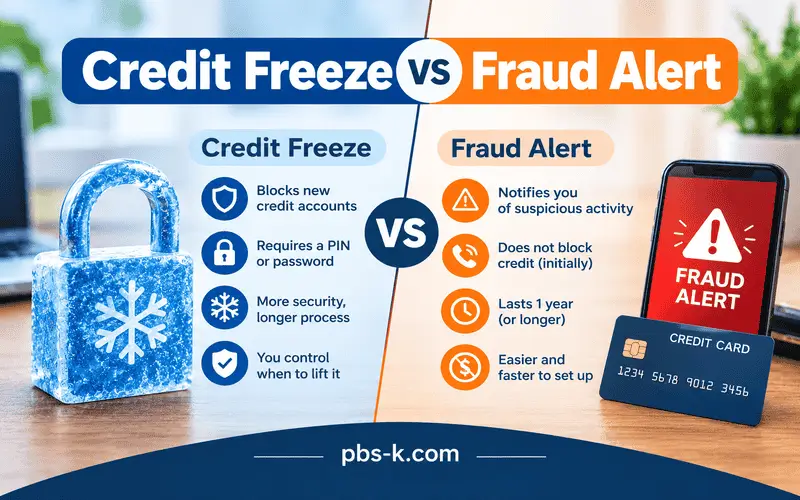
A credit freeze and fraud alert are related but different tools.
A credit freeze restricts access to your credit report.
A fraud alert tells businesses that you may be a victim of identity theft and asks them to take additional steps to verify your identity before extending new credit.
One major practical difference is how you set them up.
To freeze your reports, you generally contact each of the three major credit bureaus separately.
For an initial fraud alert, contacting one nationwide credit bureau is generally enough because that bureau must notify the other two.
An initial fraud alert normally lasts one year and can be renewed. If you have experienced identity theft and meet the applicable requirements, an extended fraud alert can last seven years.
Which One Is Better?
It depends on your circumstances.
A freeze provides a stronger restriction on access to your credit reports, but it can create an extra step when you legitimately apply for credit.
A fraud alert does not block access to your reports. Instead, it asks businesses to take additional identity-verification steps.
Some people may use both tools, particularly after identity theft.
Credit Freeze vs. Credit Lock
A credit freeze is a federally protected consumer right and is free at the major credit bureaus.
A credit lock is a separate product or feature offered by a credit reporting company or identity-protection service.
The names can sound similar because both can restrict access to a credit file.
The important point is not to assume that a paid credit-lock service is required to obtain a free security freeze.
If your primary goal is to exercise your right to restrict access to your credit report, look for the bureau’s security-freeze option.
What a Credit Freeze Does Not Stop
A credit freeze is useful, but it is not a universal fraud blocker.
It does not necessarily stop:
- Unauthorized purchases on an existing credit card
- Fraud involving an existing bank account
- Account takeover
- Phishing
- Tax-related identity theft
- Certain employment-related fraud
- Medical identity theft
- Someone using stolen login credentials
- Other forms of financial or personal-data misuse
For example, suppose someone already has access to your online banking account.
A credit freeze does not automatically protect that account.
You would still need to contact your financial institution, secure the account, change passwords, and investigate unauthorized transactions.
This is why freezing your credit should be viewed as one layer of protection rather than a complete security system.
Should You Still Monitor Your Credit After a Freeze?
Yes. A credit freeze does not eliminate the need to review your credit reports.
Regularly checking your reports can help you identify unfamiliar accounts, hard inquiries, addresses, or other information that you do not recognize.
You can obtain free credit reports through AnnualCreditReport.com, the federally authorized source for free reports from Equifax, Experian, and TransUnion.
Checking your own credit report does not hurt your credit score.
You should also monitor your bank and credit card statements because a freeze does not stop unauthorized activity on existing accounts.
How to Protect Your Child’s Credit
Parents and guardians can take steps to protect an eligible child’s credit file.
Children may not have a conventional credit history, but identity thieves can still misuse personal information.
The process for a child is different from simply freezing your own credit report. The bureau may require documentation showing your identity and your authority to act for the child.
If you believe a child’s identity has been compromised, check the current requirements of each bureau and consider using the FTC’s identity-theft resources for additional guidance.
Do not assume that your personal credit freeze automatically protects your child. A separate freeze may be necessary.
What to Do If You Find Fraud After Freezing Your Credit
A freeze is a preventive measure. If fraudulent activity has already occurred, additional action is necessary.
Start by documenting what you found.
Then consider the following steps:
- Contact the company involved in the fraudulent account or transaction.
- Dispute inaccurate or fraudulent information with the appropriate credit reporting agency.
- Review all three credit reports.
- Consider placing a fraud alert if appropriate.
- Report identity theft through IdentityTheft.gov when applicable.
- Follow the recovery steps provided by the FTC.
- Change passwords and secure affected online accounts.
- Monitor your accounts for additional suspicious activity.
The FTC explains that identity-theft victims have rights concerning fraudulent information appearing on their credit reports.
Do not assume that simply freezing your credit will remove fraudulent accounts that are already present.
Common Credit Freeze Mistakes
Freezing Only One Bureau
One of the most common mistakes is freezing one credit report and assuming all three are protected.
They are separate systems.
If you want freezes with Equifax, Experian, and TransUnion, you need to request each one separately.
Forgetting to Lift the Freeze Before Applying
A frozen report can interfere with a legitimate credit application.
Before applying for a mortgage, car loan, credit card, or other credit product, ask the lender which credit report it plans to use.
Removing the Freeze and Forgetting to Reinstate It
If you permanently remove your freeze for an application, remember to place it again when you no longer need routine access.
A temporary thaw may be more convenient when you know exactly when access is needed.
Assuming a Freeze Stops All Fraud
It does not. Continue monitoring existing accounts, statements, email, and other areas where identity theft can occur.
Using an Unofficial Website
Credit freezes involve sensitive personal information.
Use the official websites of Equifax, Experian, and TransUnion. Avoid clicking suspicious links in emails or advertisements that claim to offer a free freeze.
A Simple Credit Freeze Checklist
If you want a straightforward process, use this checklist:
- Review your current credit reports.
- Freeze your Equifax report.
- Freeze your Experian report.
- Freeze your TransUnion report.
- Save confirmation information securely.
- Continue monitoring your financial accounts.
- Check your credit reports periodically.
- Before applying for new credit, ask which bureau the lender will use.
- Temporarily lift the necessary freeze.
- Reinstate the freeze after the application process when appropriate.
This approach gives you protection without making the process unnecessarily complicated.
FAQs
What Is a Credit Freeze?
A credit freeze, also called a security freeze, restricts access to your credit report. It can make it harder for an identity thief to open a new credit account in your name.
Is a Credit Freeze Free?
Yes. Consumers can place and remove security freezes for free with Equifax, Experian, and TransUnion.
Does a Credit Freeze Hurt Your Credit Score?
No. A credit freeze does not lower your credit score. It restricts access to your credit report while your existing credit activity can continue to be reported.
Do I Need to Freeze All Three Credit Bureaus?
If you want your reports protected at all three major nationwide bureaus, yes. You must request a freeze separately from Equifax, Experian, and TransUnion.
Can I Still Use My Credit Card With a Freeze?
Yes. A credit freeze generally does not prevent you from using an existing credit card or other established credit account.
Can I Apply for a Loan With a Credit Freeze?
You can apply, but the lender may not be able to access the frozen credit report it needs. You may need to temporarily lift the appropriate freeze before the lender checks your credit.
How Long Does a Credit Freeze Last?
A credit freeze generally remains in place until you request that it be lifted or removed.
Does a Credit Freeze Stop Identity Theft Completely?
No. It mainly helps prevent new-account fraud involving access to your credit report. It does not stop every form of identity theft or fraud involving existing accounts.
What Is the Difference Between a Credit Freeze and a Fraud Alert?
A freeze restricts access to your credit report. A fraud alert tells businesses that you may be affected by identity theft and asks them to take additional steps to verify your identity before extending new credit.
Can I Freeze My Child’s Credit?
Parents and guardians can request a freeze for an eligible child, but the process can require additional documentation and proof of authority.
Should I Freeze My Credit After a Data Breach?
It can be a sensible precaution, particularly when sensitive personal information may have been exposed. You can also review your credit reports and monitor your existing financial accounts.
Where Can I Get My Free Credit Reports?
You can request free credit reports from Equifax, Experian, and TransUnion through AnnualCreditReport.com.
Conclusion
A credit freeze is a simple, free way to restrict access to your credit reports and reduce the risk of someone opening new credit accounts in your name. It does not affect your credit score or stop you from using existing credit accounts.
If you decide to use one, remember that Equifax, Experian, and TransUnion require separate freeze requests. When you later need to apply for credit, you can temporarily lift the necessary freeze and reinstate it afterward.
For the strongest protection, combine a credit freeze with regular credit-report reviews, account monitoring, strong passwords, multifactor authentication, and prompt action when you notice suspicious activity.
External Sources
Federal Trade Commission: Credit Freeze Guidance — Explains what a freeze does, who can use one, its cost, and when it should be lifted.
FTC: Credit Freeze or Fraud Alert? — Useful for explaining the distinction between a freeze and fraud alert.