
Introduction
An aircraft accident can create complicated legal questions almost immediately. A passenger, pilot, family member, or other injured person may need to determine what caused the accident, who may be responsible, what insurance coverage exists, and which laws apply.
A San Diego aviation accident lawyer may help investigate these issues and determine whether a civil claim is possible. Aviation cases can involve more than the pilot or aircraft operator. Depending on the circumstances, potential defendants can include an aircraft owner, maintenance company, manufacturer, airport operator, employer, or another party.
Aviation accidents are also investigated by government agencies for safety purposes. The National Transportation Safety Board (NTSB) investigates civil aviation accidents and determines facts and probable causes. Its investigation is different from a private civil lawsuit, which addresses legal rights, liability, and damages.
If you or a family member has been involved in an aviation accident, getting legal advice early can be important because evidence can be technical, multiple parties may be involved, and filing deadlines can apply.
What Does an Aviation Accident Lawyer Do?
An aviation accident lawyer represents or advises people who have suffered injuries, financial losses, or the loss of a family member in an aircraft accident.
The work can involve several stages:
- Reviewing how the accident occurred
- Identifying potentially responsible parties
- Collecting medical and financial records
- Preserving accident-related evidence
- Reviewing aircraft maintenance records
- Examining pilot qualifications and operational records
- Working with aviation and technical experts
- Evaluating insurance coverage
- Calculating potential damages
- Negotiating with insurers or opposing parties
- Filing a lawsuit when appropriate
Aviation litigation can be technically demanding because aircraft accidents may involve flight operations, maintenance, weather, human factors, air traffic control, aircraft design, or several causes working together.
The NTSB’s investigative process can include examination of the accident site, flight logs, maintenance records, interviews, and other evidence.
When Should You Contact an Aviation Accident Lawyer?
It is generally sensible to seek legal advice as soon as practical after a serious aviation accident.
Early legal assistance can be particularly important when:
- Someone suffered a serious injury.
- A person died in the accident.
- The cause of the accident is disputed.
- Multiple companies or individuals may be responsible.
- An aircraft malfunction may have contributed to the accident.
- Maintenance problems are suspected.
- Pilot error or training issues may be involved.
- The accident occurred during employment.
- A commercial airline was involved.
- A private aircraft was involved.
- An insurance company has requested a statement or documents.
- There may be a product liability claim.
- Important evidence could be lost or changed.
The reason for acting promptly is not simply the legal deadline. Physical evidence, records, witness recollections, electronic information, and other accident evidence can become harder to obtain as time passes.
The NTSB specifically emphasizes preservation of aircraft wreckage, recorders, documents, and other relevant materials during an investigation.
What Types of Aviation Accidents Can Lead to Claims?
Aviation accidents are not limited to major airline crashes. Potential claims can arise from many types of aircraft accidents.
Commercial Airline Accidents
These may involve passenger injuries or fatalities during commercial air transportation.
Potential issues can include:
- Pilot conduct
- Crew procedures
- Aircraft maintenance
- Mechanical failure
- Operator practices
- Airport operations
- Air traffic control
- Aircraft design or manufacturing defects
International flights can raise additional legal issues because international air transportation may be governed by treaties and other federal laws.
Private Plane Accidents
General aviation accidents involving privately operated aircraft can present different questions from airline cases.
Potential issues include pilot training, aircraft maintenance, owner responsibilities, weather decisions, aircraft defects, and operational mistakes.
Helicopter Accidents
Helicopter crashes may involve commercial operators, private owners, tour companies, medical transport operators, employers, maintenance providers, or manufacturers.
The exact legal analysis depends heavily on the facts and the parties involved.
Airport and Runway Accidents
Some accidents involve conditions at or around an airport rather than a single pilot decision.
Possible issues may include runway conditions, airport equipment, lighting, warnings, ground operations, or other safety-related circumstances.
Whether an airport or government entity can be held liable can involve special legal rules, so these cases require careful analysis.
Aircraft Maintenance Accidents
Maintenance errors can have serious consequences. A lawyer may investigate maintenance records, inspection history, repair work, replacement components, and the responsibilities of the owner and maintenance provider.
Aircraft Defect Claims
An accident may involve an allegedly defective aircraft, engine, component, or other aviation product.
These cases can become technically complex because investigators and attorneys may need to determine whether a design, manufacturing, warning, or component problem contributed to the accident.
Who Can Be Responsible for an Aviation Accident?
There is no universal answer to who is liable for an aircraft accident. Liability depends on the evidence and the applicable law.
Potentially responsible parties may include:
| Potential Party | Possible Issue |
|---|---|
| Pilot | Negligent operation, training, or decision-making |
| Aircraft owner | Maintenance, operation, or supervision issues |
| Aircraft operator | Unsafe policies or operational practices |
| Maintenance company | Improper inspection or repair |
| Manufacturer | Defective aircraft or component |
| Parts manufacturer | Defective or failed component |
| Airport operator | Certain airport-related safety issues |
| Employer | Conduct connected with an employee’s work |
| Other contractors | Services or operational failures |
This does not mean that every listed party is legally liable. A claim requires evidence connecting a party’s conduct, product, or legal responsibility to the injury or death.
California’s general negligence law provides that a person can be responsible for injuries caused by a lack of ordinary care or skill, although the specific aviation claim may involve federal law, state law, contractual issues, or other rules.
How Is Fault Determined After an Aviation Accident?
Aviation accident investigations can involve multiple sources of evidence.
Investigators may examine:
- Aircraft wreckage
- Flight data
- Cockpit voice recordings where applicable
- Pilot records
- Training history
- Maintenance records
- Weather information
- Air traffic control communications
- Witness statements
- Photographs and video
- Aircraft manuals
- Operational procedures
- Component failures
- Medical information where relevant
- Electronic or GPS information
The NTSB investigates civil aviation accidents to determine the facts, circumstances, and probable cause and may issue safety recommendations.
However, an important distinction exists between an accident investigation and a civil lawsuit.
The NTSB’s purpose is transportation safety and determining probable cause. It does not function as a court deciding civil liability. The NTSB itself explains that its investigations are fact-finding proceedings rather than proceedings designed to determine the legal rights or liabilities of parties.
That distinction matters when evaluating an aviation injury claim.
What Evidence Should You Preserve?
If you are involved in an aviation accident, preserve documents and information that may help establish what happened and how the accident affected you.
Useful materials may include:
- Medical records
- Hospital bills
- Prescription records
- Photographs of injuries
- Photographs of the accident scene
- Passenger or boarding information
- Flight details
- Insurance correspondence
- Employment records
- Proof of lost income
- Witness contact information
- Messages or emails about the accident
- Videos or photographs taken before or after the accident
- Property damage records
Do not attempt to collect dangerous wreckage yourself.
Aircraft wreckage may be part of an official investigation. The NTSB states that aircraft operators have responsibilities concerning preservation of wreckage and related evidence, subject to specified exceptions.
What Should You Do Immediately After an Aviation Accident?
Your first priority should be safety and medical care.
After that, consider these practical steps:
- Get medical attention. Some injuries may not be obvious immediately.
- Follow medical instructions. Keep records of treatment and follow-up appointments.
- Record what you remember. Write down relevant details while they are fresh.
- Preserve documents. Keep tickets, flight records, medical bills, and correspondence.
- Avoid deleting potential evidence. Preserve photographs, messages, videos, and other relevant information.
- Be cautious with recorded statements. If an insurer or another party asks detailed questions, consider obtaining legal advice first.
- Avoid speculating about fault publicly. You may not know all of the technical facts.
- Speak with an aviation attorney promptly if the accident was serious.
These steps do not establish liability by themselves. Their purpose is to help protect your health, preserve information, and avoid preventable problems while the facts are being investigated.
What Compensation May Be Available?
The damages available in an aviation accident case depend on the circumstances, the applicable law, and the type of claim.
Potential damages in an injury case can include losses associated with:
- Medical treatment
- Future medical care
- Lost income
- Reduced earning capacity
- Property damage
- Physical injuries
- Other legally recoverable losses
A wrongful death case can involve different categories of damages for qualifying surviving family members.
California’s wrongful death law allows specified individuals to bring an action when a person’s death was caused by the wrongful act or neglect of another. Eligibility depends on the relationship to the deceased and other statutory requirements.
A lawyer should evaluate damages based on the particular claim rather than promising a specific settlement or verdict.
How Long Do You Have to File an Aviation Injury Claim in California?
Deadlines are one of the most important reasons to obtain legal advice promptly.
California’s general statute of limitations provides a two-year period for an action for injury to, or death of, an individual caused by the wrongful act or neglect of another. However, aviation cases can involve different laws, defendants, contractual provisions, federal rules, international conventions, or governmental entities that may affect the applicable deadline.
This means the simple rule of “two years” should not be treated as a universal deadline for every aviation claim.
For example, a claim involving an international flight can raise treaty-based issues that are different from a purely domestic private-aircraft accident.
If a government entity is potentially responsible, special claim procedures and deadlines may also apply.
Because missing a filing deadline can seriously affect legal rights, anyone considering an aviation accident claim should have the specific circumstances reviewed by a qualified attorney as early as possible.
Does the NTSB Investigation Replace a Lawsuit?
No. The NTSB and a civil attorney have different roles.
The NTSB investigates aviation accidents for transportation safety purposes and determines facts and probable causes.
A civil claim, by contrast, seeks to determine whether a legally responsible party owes compensation to an injured person, survivor, or other qualifying claimant.
An NTSB investigation can therefore be highly relevant to understanding an accident, but it does not automatically decide who is legally liable in a civil case.
The timing of an NTSB investigation also should not be used as a reason to ignore applicable legal deadlines.
Why Aviation Accident Cases Can Be Complicated
Aviation cases can require an unusually broad investigation.
For example, suppose a small aircraft crashes after an engine problem. The initial assumption might be pilot error. A deeper investigation could reveal questions about maintenance, a replacement component, inspection procedures, fuel management, weather, or the aircraft’s operating history.
Likewise, a passenger injury during commercial air travel might involve questions about the carrier, aircraft operation, airport procedures, or international transportation rules.
This is why a lawyer handling an aviation accident claim may work with aviation specialists, engineers, medical experts, economists, or other professionals.
The goal is not simply to identify the most obvious explanation. It is to determine what the evidence actually supports.
What Should You Look for in a San Diego Aviation Accident Lawyer?
If you are evaluating attorneys, experience with aviation-related claims should be one consideration.
You may want to ask:
- Have you handled aircraft accident cases before?
- Have you represented injured passengers or surviving family members?
- Do you understand NTSB and FAA investigation procedures?
- How will evidence be preserved?
- Which parties might need to be investigated?
- Will aviation or engineering experts be involved?
- How are attorney fees calculated?
- What expenses might the client be responsible for?
- What deadlines may apply?
- Could federal or international law affect the case?
It is also useful to understand what the lawyer can and cannot tell you at an initial consultation.
A responsible attorney should not promise a particular outcome before reviewing the evidence.
Common Mistakes After an Aviation Accident
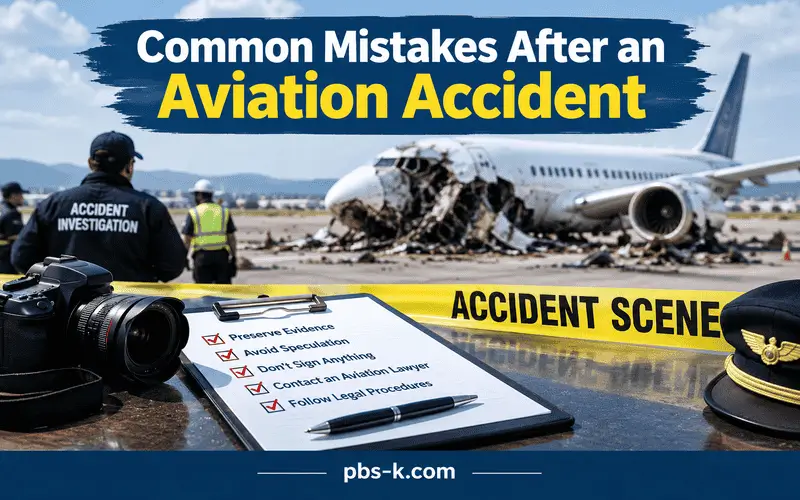
Several mistakes can make an already difficult situation harder.
Waiting Too Long
Important evidence can become more difficult to obtain, and legal deadlines can expire.
Assuming the NTSB Will Handle Your Compensation Claim
The NTSB’s safety investigation is not a substitute for pursuing a private legal claim.
Assuming the Pilot Is Automatically Responsible
Aircraft accidents can have multiple contributing causes. The evidence may point to maintenance, equipment, design, operational, or other issues.
Accepting an Early Settlement Without Advice
An early offer may not reflect future medical costs, lost earning capacity, or other losses. Whether an offer is fair depends on the specific circumstances.
Posting Speculation Online
Public statements about the accident may later become relevant. It is generally better to stick to factual information and avoid unsupported conclusions about fault.
How an Aviation Accident Claim Typically Develops
Although every case is different, a claim may generally follow this path:
Accident → Medical Care → Evidence Preservation → Investigation → Liability Analysis → Damages Evaluation → Insurance Negotiations → Litigation if Necessary
The process does not always happen in a straight line. An investigation may continue while medical treatment is ongoing, and new evidence can change the understanding of liability.
The NTSB describes its own investigative process as involving fact gathering, including information from the accident scene and sources such as flight logs, maintenance records, and interviews.
Are Aviation Accident Claims Always Filed in San Diego?
Not necessarily.
The location of the accident is only one factor.
Jurisdiction and venue can depend on facts such as:
- Where the accident happened
- Where the defendant is located
- Where the injured person lives
- Where the flight originated or ended
- Whether federal law applies
- Whether an international treaty applies
- Whether a government entity is involved
- Contractual provisions
- The type of aircraft and operation
Therefore, someone searching for a San Diego aviation accident lawyer should not assume that every case connected to San Diego must be filed in a San Diego court.
A lawyer can evaluate the appropriate forum after reviewing the facts.
Why a Case-Specific Legal Review Matters
Aviation law can overlap with personal injury law, wrongful death law, product liability, federal aviation regulations, employment law, insurance law, and international transportation rules.
That combination makes general online information useful for orientation but insufficient for determining the outcome of an individual case.
For example, two aircraft accidents might look similar but have completely different legal issues because one involved a private recreational flight while the other involved international commercial transportation.
The applicable deadline, potential defendants, available damages, and legal forum could all differ.
Conclusion
An aviation accident can leave victims and families facing medical expenses, lost income, property damage, emotional hardship, or the loss of a loved one. Determining who is legally responsible may require much more than identifying the pilot or aircraft operator.
A San Diego aviation accident lawyer can help examine the circumstances, preserve relevant evidence, identify potential defendants, evaluate damages, and determine which legal rules and deadlines may apply.
The NTSB and FAA play important roles in aviation safety and accident investigations, but those investigations are different from a civil claim for compensation.
If you or someone close to you has been affected by an aviation accident, the sensible next step is to gather your available records and obtain case-specific legal advice promptly. Because aviation claims can involve strict deadlines and specialized federal or international rules, relying on a general deadline or generic legal assumption may be risky.
FAQs
What does a San Diego aviation accident lawyer do?
A San Diego aviation accident lawyer may investigate the accident, identify potentially responsible parties, preserve evidence, assess damages, communicate with insurers, and pursue compensation through negotiation or litigation when appropriate.
Can I sue if I was injured in an airplane accident?
Possibly. Whether you have a viable claim depends on how the accident occurred, who may be legally responsible, the nature of your injuries, the applicable law, and any relevant deadlines or contractual or international rules.
Can a family sue after a fatal aircraft accident?
Potentially. California law allows qualifying individuals to bring wrongful death claims when a person’s death results from another party’s wrongful act or neglect. Eligibility and available damages depend on the circumstances.
Does the NTSB determine who is legally at fault?
No. The NTSB investigates accidents to establish facts and probable causes and improve transportation safety. Its investigation is not a civil proceeding designed to determine legal liability.
How long do I have to file an aviation accident lawsuit in California?
California’s general limitation period for personal injury and death caused by wrongful conduct is two years, but aviation claims can involve exceptions, federal law, international conventions, contractual issues, or government-claim requirements. A case-specific deadline should be confirmed with an attorney.
What evidence can help an aviation accident claim?
Potentially useful evidence includes medical records, photographs, witness information, flight information, maintenance records, pilot records, communications, videos, financial records, and other accident-related documents. Investigators may also examine aircraft wreckage, flight logs, maintenance records, and interviews.
Should I talk to the insurance company after an aviation accident?
You may need to communicate with insurers, but you should be careful about providing detailed recorded statements or accepting a settlement before understanding your rights and potential losses. Consider obtaining legal advice first if the accident involved serious injury or death.
Can an aircraft manufacturer be responsible for an accident?
Potentially. If evidence establishes that a defective aircraft, engine, component, or other product contributed to an accident, product liability may become an issue. The specific legal theory depends on the facts and applicable law.
What should I do first after an aviation accident?
Prioritize emergency medical care and safety. Afterward, preserve relevant documents and information, keep records of treatment and losses, avoid speculating publicly about fault, and consider obtaining legal advice promptly if you suffered a serious injury or lost a family member.
External Sources
National Transportation Safety Board, Aviation Investigation Classification — Useful for explaining the NTSB’s role and probable-cause investigations.
Federal Aviation Administration, Office of Accident Investigation & Prevention — Useful for explaining the FAA’s aviation accident investigation responsibilities and accident data.