
Introduction
Last updated: September 28, 2026
Iran news is closely watched because developments involving the country can affect Middle Eastern security, global energy markets, international diplomacy, and shipping through the Strait of Hormuz.
As of September 28, 2026, the most important developments center on the continuing conflict involving Iran, stalled efforts toward a diplomatic settlement, the future of the Strait of Hormuz, and the wider economic consequences of the crisis.
The situation is changing quickly. Statements from governments, military organizations, diplomats, and news agencies can describe the same event differently. For that reason, readers should distinguish confirmed events from claims made by individual parties.
Latest Iran News at a Glance
The main developments to understand right now include:
- Iran has continued to emphasize diplomacy while negotiations with the United States remain uncertain.
- Iran has proposed a path involving a ceasefire and the reopening of the Strait of Hormuz under stated conditions.
- U.S. President Donald Trump has publicly rejected the Iranian proposal, while also indicating that further talks could take place.
- The Strait of Hormuz remains one of the most important issues because it is a major route for global energy shipments.
- The conflict is affecting oil prices, fuel markets, shipping, and economies far beyond the Middle East.
- Iran’s nuclear program remains an important part of the broader dispute, although the status of international verification has been affected by earlier attacks and restrictions on access.
- Reports concerning military incidents, negotiations, and alleged Iranian involvement in events outside Iran require careful verification.
This means that “Iran news” is not one single story. It is a collection of interconnected diplomatic, military, economic, nuclear, and regional developments.
What Is Happening in Iran Right Now?
The central issue in current Iran news is the continuing confrontation involving Iran, the United States, and Israel.
The conflict has developed into a broader regional crisis involving military operations, attacks and counterattacks, maritime security concerns, and pressure on diplomatic channels.
At the same time, Iran has continued to communicate through diplomatic channels. Iranian officials have argued that negotiations can provide a route toward ending the conflict.
The United States has taken a different public position on several important conditions. Recent reporting indicates that Washington rejected an Iranian proposal concerning the Strait of Hormuz and ending the fighting, although further discussions have remained possible.
This creates an important distinction: a proposal, a public statement, and an agreed peace deal are not the same thing.
Readers should therefore be cautious with headlines suggesting that a final agreement has already been reached unless the agreement has been independently confirmed by the relevant parties.
Iran and the United States
Relations between Iran and the United States are at the center of many current headlines.
The two countries have a long history of disputes involving Iran’s nuclear activities, sanctions, regional security, military operations, and diplomatic relations.
In September 2026, diplomacy again became a major focus.
Iranian officials have communicated proposals through intermediaries, including discussions concerning the Strait of Hormuz and an end to hostilities. Reuters reported that Iran had submitted a proposal through mediators and that President Masoud Pezeshkian had expressed interest in reviving diplomatic efforts.
The United States, meanwhile, has publicly rejected the latest proposal while indicating that talks could continue.
The practical question is therefore not simply whether Iran and the United States are “talking.” The more important questions are:
- What conditions does each side require?
- Can those conditions be reconciled?
- Can an agreement be verified?
- Would an agreement result in an actual reduction in military activity?
- What would happen to sanctions and maritime restrictions?
Until those questions are answered, reports about negotiations should be treated as developments in diplomacy rather than evidence of a completed settlement.
The Strait of Hormuz Explained
The Strait of Hormuz is one of the most important subjects in Iran news.
It is a narrow waterway connecting the Persian Gulf with the Gulf of Oman and the wider Arabian Sea. Because major oil and gas producers are located around the Persian Gulf, the strait is strategically important to international energy trade.
Any major disruption can therefore affect:
- Oil prices
- Natural gas markets
- Shipping costs
- Insurance premiums
- Fuel prices
- Energy security
- Importing countries
- Global inflation expectations
Iran has linked the reopening of the waterway to conditions surrounding the conflict and U.S. military and economic pressure.
Reuters reported on September 22 that an Iranian official said Tehran was prepared to reopen the strait within a week if the United States reduced military pressure and lifted its blockade of Iranian ports.
A later Reuters report said President Trump rejected an Iranian proposal to reopen the strait and end the fighting, although further negotiations were expected to remain possible.
The situation demonstrates why a regional conflict can quickly become a global economic issue.
Why Does Iran Matter to Global Oil Markets?
Iran is a major energy producer, and the wider Persian Gulf region is central to global oil and gas supplies.
When shipping through the Strait of Hormuz becomes uncertain, traders may price additional risk into energy markets.
That does not automatically mean that every disruption will cause the same increase in fuel prices. The eventual effect depends on factors such as:
- How long the disruption lasts
- How much shipping is affected
- Whether alternative routes can be used
- How much oil is stored globally
- Production levels in other countries
- Insurance and transportation costs
- Expectations about future supply
Recent Reuters reporting has linked the Iran conflict and uncertainty around the Strait of Hormuz to higher oil prices and increased pressure on fuel markets.
The effect can also reach countries that are not directly involved in the conflict.
For example, higher energy costs can increase transportation expenses, production costs, and household fuel bills.
Iran’s Nuclear Program
Iran’s nuclear program is another major part of international Iran news.
The dispute involves questions about uranium enrichment, nuclear safeguards, inspections, sanctions, and concerns expressed by governments about the potential military use of nuclear technology.
Iran has repeatedly maintained that its nuclear activities have peaceful purposes. Other governments have raised concerns about the scale and nature of Iran’s nuclear capabilities.
The International Atomic Energy Agency, or IAEA, plays an important role because it is responsible for international nuclear safeguards and verification activities involving Iran.
The situation is complicated by the security environment.
An IAEA report published in 2025 stated that the agency had stopped in-field verification activities after attacks on Iranian nuclear facilities and had withdrawn inspectors from Iran for safety reasons. The agency continued monitoring through available satellite imagery and open-source information.
Because access and verification can change over time, older nuclear information should not automatically be treated as a complete description of the situation in 2026.
For readers following Iran nuclear news, the most useful question is often not simply “Does Iran have a nuclear program?” but rather:
What can international inspectors currently verify, and what remains uncertain?
Iran’s Economy Under Pressure
Iran’s economy is affected by both domestic conditions and international restrictions.
The country has significant energy resources, a large population, manufacturing capacity, agriculture, and a broad domestic market. However, sanctions, currency pressures, inflation, energy shortages, and geopolitical uncertainty have created major economic challenges.
World Bank data lists Iran’s 2025 population at approximately 92.4 million. The same dataset reports 2025 GDP of about $362.7 billion in current U.S. dollars, while its reported annual consumer inflation figure for 2025 was 42.2%.
These figures provide useful background, but economic data should always be read with its measurement date and methodology in mind.
For ordinary households, inflation can affect:
- Food prices
- Housing costs
- Transportation
- Imported products
- Healthcare expenses
- Household purchasing power
For businesses, currency volatility and sanctions can make international trade, investment, payments, and access to imported equipment more difficult.
How Iran News Affects Other Countries
Iran developments are not limited to Iran’s borders.
The country’s location gives it importance in several regional systems, including energy transportation, maritime trade, and Middle Eastern security.
Countries can be affected through:
Energy
Oil and gas prices can react to expectations about supply disruptions.
Shipping
Uncertainty around the Strait of Hormuz can increase shipping and insurance costs.
Regional Security
Military escalation involving Iran can affect neighboring countries and U.S. military facilities in the region.
Inflation
Higher energy and transportation costs can eventually influence consumer prices in importing countries.
Diplomacy
Iran’s relationships with the United States, Gulf countries, Russia, China, and European governments can influence broader international negotiations.
Iran’s Role in Middle Eastern Politics
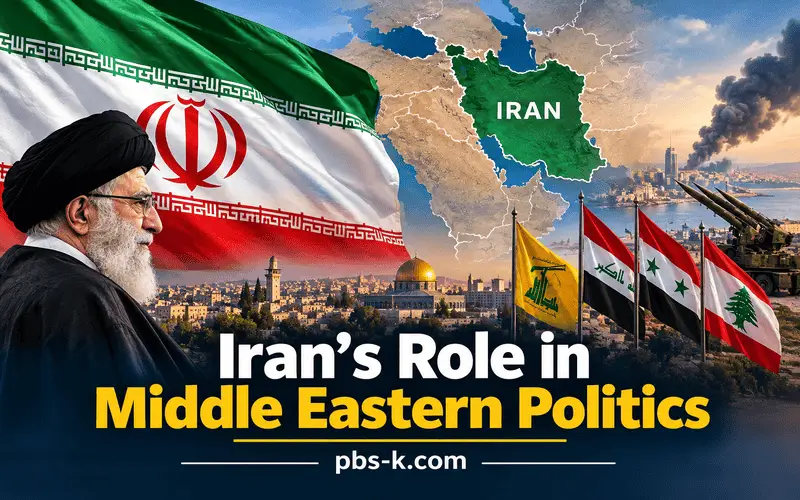
Iran is an important regional power, and its foreign policy extends beyond its own borders.
Its relationships with groups and governments across the Middle East have been a major subject of international reporting for years.
Iran has relationships with Iraq, Lebanon, Syria, Yemen, and other regional actors, although the nature and degree of those relationships vary.
The conflict has also increased attention on the actions of the Houthi movement in Yemen and the security of shipping routes.
It is important not to treat every regional armed group as simply an extension of the Iranian government. Their political goals, organizational structures, and decision-making can differ, even when governments or analysts describe them as Iran-aligned or Iran-backed.
That distinction helps readers understand complicated regional stories without reducing every event to a single actor.
How to Read Breaking Iran News
Breaking news can be especially difficult to evaluate during a conflict.
A useful approach is to check five things before accepting a major claim.
1. Check the Time
A story from yesterday may already be outdated.
Look for the publication time and the latest update.
2. Identify the Source
Ask whether the information comes from:
- A government
- A military organization
- A news agency
- A named official
- An independent journalist
- An eyewitness
- Anonymous sources
These sources do not carry the same evidentiary weight.
3. Separate Claims From Confirmed Events
A government may say that it achieved a military objective. Another government may dispute that claim.
The neutral way to report this is to identify who made the claim and whether independent evidence exists.
4. Look for Independent Confirmation
Major developments are more reliable when multiple credible sources independently report the same basic facts.
5. Watch for Changed Information
During military crises, early reports can contain incorrect casualty figures, locations, or descriptions of events.
A later correction does not necessarily mean the original report was intentionally misleading. It may reflect the difficulty of gathering information during an active conflict.
What Are the Most Important Iran News Topics to Follow?
If you want to follow Iran developments efficiently, concentrate on a small number of recurring subjects.
U.S.-Iran Diplomacy
Watch for confirmed meetings, proposals, mediators, sanctions discussions, and official agreements.
Strait of Hormuz
Follow shipping conditions, maritime incidents, and statements from Iran and other countries involved in Gulf security.
Nuclear Negotiations
Watch IAEA statements, inspection developments, enrichment-related announcements, and diplomatic negotiations.
Oil and Gas
Energy prices can provide an indication of how markets are reacting to perceived supply risks, although prices are influenced by many factors.
Military Developments
Separate confirmed attacks and official statements from unverified claims circulating on social media.
Domestic Iranian Politics
Presidential statements, parliamentary debates, economic policy, and public developments inside Iran can influence the country’s foreign policy.
Who Is Iran’s President?
Masoud Pezeshkian is Iran’s president.
The presidency is important, but Iran’s political system contains several major institutions and centers of authority. Therefore, the president does not personally control every aspect of foreign, military, or security policy.
Iran’s Supreme Leader, government, parliament, judiciary, military institutions, and other bodies have distinct roles.
This structure is important when reading Iran news because a statement from the president may represent one part of Iran’s political system rather than a final decision on every matter.
Why Are Iran News Reports Sometimes Conflicting?
Conflicting reports are common during international crises.
Iranian, American, Israeli, European, and other governments may have different accounts of events. Military organizations also release statements that can emphasize their own interpretation.
News organizations may initially depend on anonymous officials, satellite imagery, video footage, or information supplied by parties to the conflict.
That is why responsible readers should look for:
- Named sources
- Independent verification
- Multiple reputable reports
- Official documents
- Precise dates
- Clear distinctions between fact and allegation
A good news report should also make uncertainty visible instead of pretending that every detail is already known.
What Should Readers Expect Next?
The most closely watched developments are likely to involve diplomacy, the Strait of Hormuz, military activity, energy markets, and nuclear negotiations.
The immediate diplomatic picture remains fluid.
Iran has signaled an interest in negotiations and has connected the reopening of the Strait of Hormuz with conditions surrounding the conflict. The United States has rejected the latest Iranian proposal publicly while leaving room for further talks.
That means readers should watch for concrete developments rather than relying on predictions.
A confirmed meeting, signed agreement, verified ceasefire, change in shipping conditions, or formal statement from an international organization is more meaningful than an unverified social-media claim.
How to Find Reliable Iran News
No single source should necessarily be treated as the complete picture.
For international developments, readers can compare reporting from organizations such as Reuters and the Associated Press with official statements from the United Nations and relevant international organizations.
For nuclear developments, the IAEA is a key reference point.
For broader economic data, the World Bank provides country-level indicators.
Iranian official statements can also be useful for understanding Tehran’s stated position, but they should be clearly identified as official Iranian positions rather than automatically presented as independently verified facts.
This approach gives readers both the event itself and the context needed to understand competing claims.
You may like to read: Pam Bondi
Iran News: Key Takeaways
The current Iran news cycle is shaped by several connected issues rather than one isolated event.
The conflict involving Iran has international consequences because of the country’s strategic location, energy resources, regional relationships, and the importance of the Strait of Hormuz.
Diplomacy remains an important part of the story. Iran has put forward proposals involving an end to hostilities and the reopening of the major shipping route, while the United States has rejected the latest proposal publicly but indicated that further talks could occur.
The nuclear issue remains another major concern, with international verification complicated by security conditions and access limitations.
For readers, the most reliable way to follow developments is to focus on dated reporting, named sources, independent verification, and official documents rather than treating every breaking headline or social-media post as established fact.
FAQs
What is the latest Iran news?
As of September 28, 2026, major Iran news is focused on the continuing conflict, diplomatic efforts between Iran and the United States, the Strait of Hormuz, regional security, and the economic effects of the crisis.
Is Iran currently in a conflict with the United States?
Yes. Current reporting describes an ongoing U.S.-Iran conflict, with military activity and continuing diplomatic efforts to find a settlement.
What is happening with the Strait of Hormuz?
The Strait of Hormuz remains a major focus of the conflict. Iran has linked its reopening to conditions involving the fighting and U.S. pressure, while the waterway’s security has become an international concern because of its importance to energy shipping.
Is Iran still trying to negotiate?
Iranian officials have continued to emphasize diplomacy. Recent reporting indicates that Tehran submitted proposals through intermediaries, while U.S. officials have indicated that additional discussions may occur.
Why is Iran’s nuclear program important?
Iran’s nuclear program is important because of questions surrounding uranium enrichment, international safeguards, inspections, and concerns about nuclear proliferation. The IAEA is the principal international organization involved in nuclear verification.
How does Iran affect oil prices?
Iran is an important energy producer and is located near the Strait of Hormuz. Military or shipping disruptions can increase concerns about global oil and gas supply, potentially putting upward pressure on energy prices.
Who is the president of Iran?
Masoud Pezeshkian is Iran’s president. Iran’s political system also includes other major institutions, so the president is only one part of the country’s decision-making structure.
Where can I follow reliable Iran news?
For international reporting, readers can compare established news organizations such as Reuters and the Associated Press with official sources such as the United Nations and IAEA. Comparing several credible sources is particularly useful during fast-moving conflicts.
Conclusion
Iran news is currently dominated by the conflict, diplomacy, the Strait of Hormuz, nuclear issues, and economic consequences.
The situation remains fluid, so the date and source of a report matter. Readers should distinguish between confirmed events, official claims, diplomatic proposals, and information that remains unverified.
For the clearest picture, follow developments from multiple credible sources and pay particular attention to confirmed diplomatic agreements, changes in maritime conditions, international nuclear reporting, and independently verified military developments.
External Source
Associated Press — useful for independent international reporting and developing stories.
United Nations Iran coverage — useful for UN statements and official international developments