
Introduction
If your air conditioner stops cooling, makes unusual noises, or starts leaking water, one of your first questions is likely, how much does AC repair cost?
In the United States, repairing a residential air conditioner typically costs around $150 to $650 for common repairs, although more complicated problems can cost $1,000 or considerably more. Recent 2026 estimates from HomeAdvisor put the average repair at approximately $417, with a typical range of $172 to $664. Your final bill depends on the faulty component, the type of AC system, labor rates, and whether replacement parts are required.
A clogged drain line or faulty capacitor may be relatively inexpensive to fix. A damaged compressor, refrigerant leak, or failed evaporator coil can require substantially more work.
This guide explains typical AC repair prices, what affects your bill, how to compare estimates, and when replacing an older unit might make more financial sense.
How Much Does AC Repair Cost on Average?
For many homeowners, an ordinary AC repair falls somewhere between $150 and $650. However, there is no single price that applies to every air conditioner.
The following estimates provide a starting point for budgeting.
| Repair category | Estimated cost in the US |
|---|---|
| Common AC repairs | $150–$650 |
| Diagnostic or service call | $75–$200 |
| Thermostat replacement | $60–$440 |
| Capacitor replacement | $120–$475 |
| Fan or blower motor replacement | $250–$800 |
| Refrigerant leak repair | $225–$1,600 |
| Evaporator coil replacement | $600–$2,000 |
| Compressor replacement | $800–$3,000 |
Sources: HomeAdvisor and Angi 2026 cost guides. These are approximate US price ranges, and individual estimates vary by system, parts, and location. Some ranges overlap because repair methods and equipment differ.
A technician may charge a diagnostic fee even if you decide not to proceed with the repair. Ask whether that fee is included in the quoted repair price or billed separately.
Remember that a published national average is not a guaranteed local price. The best estimate comes from diagnosing the actual problem and identifying the parts and labor required.
AC Repair Cost by Type of Problem
The type of fault is one of the biggest factors affecting air conditioner repair costs. Some issues involve simple electrical components, while others require extensive labor or expensive replacement parts.
Capacitor Replacement
Estimated cost: $120–$475.
A capacitor helps the air conditioner’s motor or compressor start and run. When it fails, the outdoor unit may hum without starting, or the fan may struggle to operate.
Replacing a capacitor is often less expensive than replacing a major component. However, similar symptoms can result from other electrical or mechanical faults, so a technician should confirm the diagnosis before replacing parts.
Thermostat Repair or Replacement
Estimated cost: $60–$440.
The thermostat controls when your air conditioner operates. Incorrect temperature readings, dead batteries, loose connections, or a faulty thermostat can cause cooling problems.
Before paying for a replacement, check the thermostat batteries if applicable, confirm the cooling setting is selected, and make sure the temperature setting is below the room temperature.
Smart thermostats and systems with specialized controls may cost more to replace than basic models.
AC Fan Motor or Blower Motor Replacement
Estimated cost: $250–$800 for many blower motor replacements.
The outdoor fan moves heat away from the condenser, while the indoor blower circulates cooled air through the home.
A faulty motor can cause weak airflow, unusual noises, overheating, or poor cooling. The final cost depends on which motor has failed, the equipment model, part availability, and the time required to access it.
A fan that does not turn is not automatically proof of a bad motor. Electrical problems and other component failures can produce similar symptoms.
Refrigerant Leak Repair
Estimated cost: $225–$1,600.
Refrigerant carries heat through the air conditioning system. If the system has a leak, cooling performance can decline, and the compressor may be put under additional strain.
The total cost depends on how easily the leak can be located, whether tubing or another component needs repair, and how much refrigerant is required after the repair.
Be cautious about paying for repeated refrigerant top-ups without investigating the cause. Refrigerant circulates through a closed system, so a low charge can indicate a leak or another underlying issue. Ask the technician to explain the diagnosis and whether leak testing is needed.
Evaporator Coil Replacement
Estimated cost: $600–$2,000.
The evaporator coil absorbs heat from indoor air. Damage, corrosion, or a refrigerant leak associated with the coil can lead to expensive repairs.
The work may involve removing surrounding components, recovering refrigerant, installing the replacement, and checking system operation. These steps can make the repair more labor-intensive than replacing a small electrical part.
For an older air conditioner, compare the coil replacement estimate with the cost and expected lifespan of a new system.
Compressor Repair or Replacement
Estimated cost: $800–$3,000 for many compressor replacements.
The compressor circulates refrigerant through the cooling system. A major compressor failure can prevent the AC from cooling properly or stop the system from operating.
Costs can rise because the job may require specialized parts, refrigerant handling, extensive labor, and additional electrical checks.
A compressor failure does not always mean the entire system must be replaced. However, replacement can be worth considering when the unit is old, out of warranty, or has a history of repeated breakdowns.
Drain Line Cleaning
Estimated cost: approximately $75–$250, depending on the blockage and service provider.
Air conditioners remove moisture from indoor air. That moisture normally drains away through a condensate line.
If the line becomes blocked, water may collect near the indoor unit or trigger a safety switch that shuts down cooling. A simple blockage may be inexpensive to clear, while damaged drain pans or inaccessible piping can increase the price.
If water is leaking near electrical equipment, switch off the system when safe and arrange a professional inspection.
Circuit Board or Electrical Repairs
Estimated cost: $100–$700 for many circuit board repairs or replacements.
The control board manages different functions of the air conditioner. Damaged wiring, failed relays, power issues, or electronic component faults can prevent normal operation.
Electrical problems can look similar to thermostat or motor failures. A proper diagnosis helps avoid replacing a working component unnecessarily.
Do not open energized electrical compartments or attempt repairs involving high-voltage components yourself.
What Factors Affect AC Repair Prices?
Two homeowners with similar air conditioners may receive different quotes. These are the main reasons.
1. Type and Size of the AC Unit
A small window air conditioner generally costs less to repair than a central air conditioning system. Central units and ductless mini-splits can involve different components, access requirements, and diagnostic procedures.
Commercial equipment and large multi-zone systems may cost more because of their size and complexity.
2. Labor and Diagnostic Fees
Technicians may charge a service call fee, an hourly labor rate, or a flat price for a particular repair.
A diagnostic visit can involve testing electrical components, measuring operating conditions, inspecting airflow, and checking the refrigerant circuit when appropriate.
Before scheduling a visit, ask:
- What is the initial service or diagnostic fee?
- Is that fee credited toward the repair?
- Is labor included in the quoted price?
- Will there be additional charges if diagnosis takes longer than expected?
3. Replacement Parts
The cost of a replacement part depends on the equipment manufacturer, model, availability, and whether the part is standard or specialized.
An inexpensive component may still produce a substantial bill if it is difficult to access or requires extensive testing and labor.
4. Time of Year and Emergency Service
Demand for AC technicians often rises during hot weather. Same-day appointments, weekends, holidays, and after-hours visits may carry additional charges.
If your situation is not urgent, ask whether scheduling a regular appointment could reduce the total cost.
5. Age and Condition of the System
Older systems may need less readily available parts. They may also have several worn components rather than one isolated problem.
When a repair estimate is high, ask the technician whether other components appear likely to need attention soon. This can help you compare the cost of repairing the existing unit with replacing it.
6. Warranty Coverage
Your manufacturer’s warranty may cover eligible replacement parts, while labor may remain your responsibility. Coverage depends on the warranty terms, registration requirements, system age, and the cause of failure.
Check your warranty documents before authorizing an expensive repair. A home warranty, if you have one, may have separate service fees, exclusions, and claim requirements.
AC Repair Cost by Type of Air Conditioner
The equipment you own can affect both the likely repair and the final price.
| AC system type | Common repair concerns | General cost expectation |
|---|---|---|
| Window AC | Drainage, fan, controls, electrical faults | Often lower-cost repairs |
| Portable AC | Drainage, filters, controls, fan problems | Often lower-cost repairs |
| Central AC | Capacitor, motor, coil, compressor, refrigerant leaks | Moderate to expensive |
| Ductless mini-split | Sensors, electronics, refrigerant leaks, motors | Varies by model and fault |
| Multi-zone system | Multiple indoor units, controls, communication faults | Can be more expensive |
These categories are relative comparisons, not fixed price quotes. A small window unit with a major sealed-system failure may be uneconomical to repair, while a central AC unit may need only an inexpensive component.
For a fair comparison, consider the specific fault, the equipment’s age, the repair warranty, and the price of a suitable replacement.
How Much Does Emergency AC Repair Cost?
Emergency AC repair may cost more than a standard appointment because of after-hours labor, urgent scheduling, and additional service fees.
HomeAdvisor lists diagnostic or troubleshooting visits at approximately $75 to $180, while emergency labor can be substantially higher depending on the provider and timing.
You may face additional charges for:
- Evening, weekend, or holiday appointments.
- Same-day emergency visits.
- Extra diagnostic time.
- Hard-to-find replacement parts.
- Repairs that require multiple visits.
Before agreeing to emergency service, ask for the call-out fee, the estimated repair price, and any additional charges.
If your AC stops working during hot weather, consider the safety of everyone in the home, especially older adults, young children, and people who are sensitive to heat. Do not delay urgent help if indoor conditions become dangerous.
Is It Better to Repair or Replace an AC Unit?
Deciding whether to repair or replace an air conditioner requires more than comparing two prices. You should also consider the system’s age, efficiency, warranty, and likelihood of future breakdowns.
A repair may be the better choice when the unit is relatively new, the fault is isolated, and replacement parts are reasonably priced.
Replacement may deserve serious consideration when the system is older, major components have failed, or repair bills are becoming frequent.
For context, Angi’s 2026 guide lists typical AC replacement costs of approximately $3,800 to $7,500. The actual cost depends on equipment size, installation requirements, and location.
A Simple Repair-or-Replace Example
Imagine your air conditioner needs a $250 repair.
If the system otherwise works well and has several expected years of useful service remaining, repairing it may be sensible.
Now imagine the same system needs a $2,000 compressor replacement, has a history of repeated failures, and is already old. Comparing the repair with a replacement estimate becomes more important.
Use the following checklist before making a decision:
- Age: Is the system relatively new or approaching the end of its useful life?
- Repair price: How much will the repair cost, including parts and labor?
- Warranty: Is the failed component covered?
- Reliability: Has the unit needed several repairs recently?
- Energy use: Is the existing system struggling to maintain comfort or using excessive energy?
- Replacement budget: Can you afford a new system, and what are the expected long-term benefits?
There is no universal rule that an AC unit must be replaced after a specific number of years or whenever a repair reaches a particular percentage of its replacement price. Compare the actual estimates and expected future costs.
How to Reduce Your AC Repair Costs
You cannot prevent every breakdown, but a few practical steps may help reduce avoidable expenses.
1. Check Simple Problems First
Before booking a repair, confirm that the thermostat is set correctly, the batteries are working if applicable, and the circuit breaker has not tripped.
Check the air filter and replace it if it is dirty and due for replacement. A clogged filter can restrict airflow and affect cooling performance.
If a breaker repeatedly trips, do not keep resetting it. Arrange a professional inspection.
2. Keep Up With Routine Maintenance
Regular maintenance helps identify problems before they become more serious.
Depending on your system and environment, maintenance may include:
- Checking and replacing air filters as needed.
- Keeping the outdoor unit clear of leaves and debris.
- Inspecting accessible condensate drains.
- Having coils and electrical connections checked by a qualified technician.
- Scheduling professional servicing according to manufacturer recommendations.
Maintenance cannot guarantee that the system will never fail, but it can help identify conditions that interfere with normal operation.
3. Compare Written Estimates
For an expensive repair, consider obtaining a second opinion.
Ask each provider to identify the fault, list the required parts, separate labor and additional fees, and explain any warranty on the work.
Make sure you compare equivalent repairs. A lower quote may exclude diagnostic fees, replacement parts, or follow-up testing.
4. Check Your Warranty Before Paying
A parts warranty may significantly reduce your out-of-pocket cost. However, labor, refrigerant, diagnostic visits, and other expenses may not be included.
Confirm the coverage directly with the manufacturer or warranty provider before approving the repair.
5. Avoid Unnecessary Parts Replacement
A symptom does not always identify the failed component. For example, weak cooling could result from restricted airflow, an electrical issue, a refrigerant problem, or a malfunctioning component.
Request an explanation of the diagnosis rather than authorizing several replacements based only on symptoms.
What to Check Before Calling an AC Technician
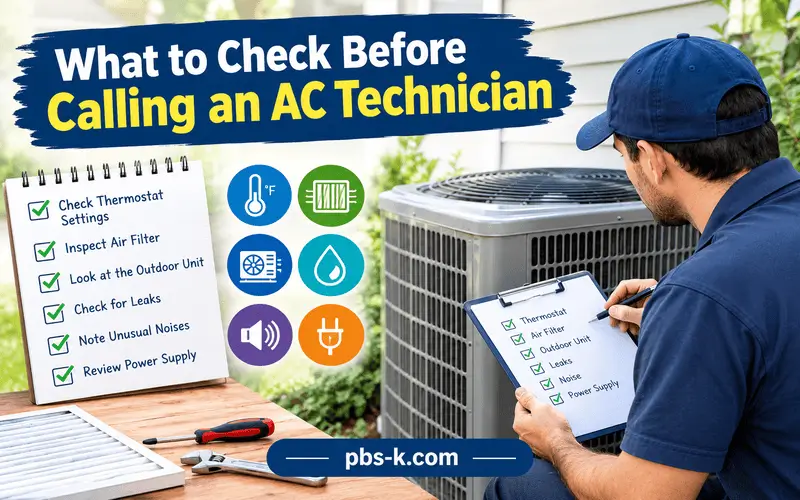
A few observations can help the technician diagnose the problem more efficiently.
AC runs but does not cool
Check the thermostat setting and air filter. Mention whether airflow feels weak or normal.
Unusual buzzing or rattling
Note when the sound starts and whether it comes from the indoor or outdoor unit. Switch the system off if the noise is severe or accompanied by a burning smell.
Water leaking indoors
Turn off the AC if safe to do so, protect nearby belongings, and arrange an inspection. Keep water away from electrical equipment.
AC will not turn on
Check the thermostat, power supply, and breaker once if it is safe. Do not open electrical compartments or repeatedly reset a tripping breaker.
Write down when the problem started, any unusual sounds, and whether the AC stopped suddenly or gradually lost cooling. Share the equipment model and age if you know them.
These observations do not replace a professional diagnosis, but they can help narrow down the possible causes.
How to Choose a Reliable AC Repair Technician
The quality of the diagnosis matters as much as the price. A cheap repair that does not resolve the original problem may lead to additional costs.
Before hiring a technician, consider these points:
- Relevant experience: Choose someone familiar with your type and brand of air conditioner.
- Clear pricing: Ask for a written estimate and an explanation of what is included.
- Appropriate credentials: Check applicable licensing, insurance, and local requirements.
- Refrigerant qualifications: In the United States, technicians performing work covered by EPA Section 608 must hold the applicable certification. US EPA+1
- Parts and labor warranty: Ask how long the repair is covered and what the terms exclude.
- Customer feedback: Review recent feedback and look for consistent reports of reliable service.
- No-pressure recommendations: Be cautious when a provider recommends replacing the entire system without explaining why a repair is unsuitable.
For a major compressor or coil replacement, ask whether the technician can explain the expected remaining service life of the existing system and the likely cost of a new unit.
FAQs
How much does AC repair cost on average?
In the United States, common air conditioner repairs typically cost around $150 to $650. HomeAdvisor’s 2026 estimate places the average at about $417, although complex repairs can cost much more.
What is the cheapest AC repair?
Simple repairs, such as clearing an accessible condensate drain blockage or replacing certain electrical components, are often among the less expensive jobs. The actual cost depends on the fault, service fee, and labor required.
How much does it cost to fix an AC that is not cooling?
The cost can range from a relatively inexpensive thermostat or airflow fix to hundreds or thousands of dollars for a major component failure. A technician must identify the cause before providing a reliable estimate.
How much does an AC diagnostic visit cost?
A diagnostic or service call commonly costs approximately $75 to $200 in the United States. Some companies include the fee in the final repair bill, while others charge separately.
Is it worth repairing a 10-year-old air conditioner?
It can be. A relatively inexpensive repair may be worthwhile if the system is reliable and otherwise in good condition. For a costly repair, compare the quote with a replacement estimate, expected energy use, warranty coverage, and likely future maintenance needs.
Does AC repair cost more during summer?
It can. High seasonal demand, limited appointment availability, and emergency service can increase costs. However, prices vary by provider and location, so summer repairs are not automatically more expensive everywhere.
Does homeowners insurance cover AC repairs?
Standard homeowners insurance generally does not cover ordinary wear and tear or routine mechanical breakdowns. Coverage may apply to certain losses caused by a covered event, depending on the policy. Review your policy or contact your insurer before assuming the repair will be covered.
Is it cheaper to repair or replace an AC compressor?
Repairing a minor compressor-related electrical issue can be much cheaper than replacing the compressor itself. If the compressor has suffered a major failure, compare the replacement price with the cost of installing a new AC system, particularly if the existing unit is old or out of warranty.
How can I avoid paying for unnecessary AC repairs?
Request a clear diagnosis, ask which component has failed, and obtain a written estimate. For expensive work, a second opinion can help you confirm whether the proposed repair is reasonable.
How much does AC repair cost for a window unit?
Window air conditioners often cost less to repair than central systems because they are smaller and have simpler installation requirements. However, a major sealed-system failure may make replacing the window unit more economical than repairing it.
Conclusion
The answer to how much AC repair costs depends on the type of air conditioner, the component that has failed, labor charges, and any additional service fees. For many US homeowners, common repairs fall within the $150 to $650 range, while major component replacements can cost considerably more.
Start by checking simple issues such as thermostat settings and a dirty air filter. If the problem continues, obtain a written estimate and confirm whether parts, labor, diagnostics, and warranty coverage are included.
For expensive repairs, compare the total cost with the expected remaining life of your AC unit and the price of replacement. A clear diagnosis and a fair estimate can help you make a more informed decision.