
Introduction
FlixBus has changed the way many people travel between cities by combining online booking technology with a network of independent bus companies. Instead of relying entirely on a fleet of buses it owns and operates itself, Flix works with local transport partners to provide scheduled journeys under the FlixBus brand.
Understanding how FlixBus works with bus operators helps explain how the company expands its routes, sells tickets, coordinates journeys, and serves passengers across different regions. It also provides useful information for bus company owners who want to explore new commercial opportunities.
Flix’s business model combines a digital platform, network planning, marketing, pricing, and customer-facing services with transportation provided by local bus partners. According to its official company information, these partnerships are central to its asset-light operating model. Source: Flix official company overview.
This guide explains how the partnership works, what each side contributes, how operators can explore collaboration, and what passengers should understand before booking a journey.
How FlixBus Works With Bus Operators
FlixBus works with independent bus companies that provide the vehicles, drivers, and transportation services needed to operate scheduled routes. Flix coordinates important commercial and digital functions, including network planning, marketing, ticketing, and pricing through its technology platform.
The precise division of responsibilities depends on the relevant partnership agreement and local market.
In simple terms, the model brings together two complementary strengths:
- FlixBus: Provides the brand, digital booking platform, customer reach, network coordination, and commercial technology.
- Bus operators: Provide the vehicles, drivers, and operational expertise needed to transport passengers.
This arrangement allows Flix to expand its network without purchasing and operating every bus itself. At the same time, partner companies can potentially access more customers through an established travel platform.
Flix describes its approach as an asset-light business model in which its technology and commercial capabilities work alongside local transport partners. Source: Flix business model.
What Is the FlixBus Business Model?
The FlixBus business model combines travel technology with transportation services delivered through a partner network.
Traditional bus companies may handle much of their own marketing, ticket sales, route planning, and customer acquisition. Under a FlixBus partnership, some of these activities can be coordinated through Flix’s broader platform and network.
This creates a division between the commercial systems that connect passengers with journeys and the physical operations required to run those journeys.
1. FlixBus Provides the Digital Platform
Flix provides a booking experience through its website and mobile app. Customers can search for routes, compare departure times, select available services, and purchase tickets.
The platform also supports the management of bookings and the presentation of travel information.
For a partner operator, access to an established digital sales channel can reduce the need to attract every passenger independently. It may also help the company reach people who would not otherwise know about its services.
2. FlixBus Coordinates Network Planning
Network planning helps determine which cities and stops are connected, when services run, and how individual journeys fit into the wider network.
Flix uses its commercial and technological capabilities to plan services and coordinate its network with local operators.
The exact route, schedule, and operating arrangements depend on the market and the relevant agreement.
3. Bus Operators Provide Transportation
Partner companies carry out the physical transportation work. Depending on their contractual responsibilities, this can include supplying coaches, employing drivers, preparing vehicles, and operating scheduled journeys.
Their local knowledge and experience are important because a successful booking platform cannot transport passengers without reliable vehicles and operational staff.
4. The Partnership Connects Both Sides
The arrangement connects customer demand with available transportation capacity.
Flix provides the digital and commercial infrastructure, while operators contribute the resources and expertise required to run services. Both sides can benefit when routes attract passengers and operate efficiently.
Who Owns the Buses Used by FlixBus?
FlixBus does not rely exclusively on buses it owns. Its network includes vehicles supplied and operated by partner companies.
Under this model, an independent transport company may provide a coach for a journey sold through the FlixBus website or app. Passengers may see the FlixBus brand during booking even though another company physically operates the service.
The distinction is important because a familiar booking brand does not necessarily identify the legal owner of a vehicle or the employer of its driver.
Ownership and operating arrangements can vary by service and region. Flix’s wider corporate group also includes other brands and transport arrangements, so it would be inaccurate to assume that every journey follows precisely the same structure.
For a passenger, the practical takeaway is to check the booking details for the operating partner whenever that information is provided.
What Does FlixBus Do for Its Partners?
Flix can contribute several commercial and technological resources that help partner companies reach customers and coordinate their services.
Marketing and Customer Acquisition
FlixBus has an established brand and a platform through which passengers search for intercity journeys. Listing services on this platform can introduce an operator to customers outside its existing sales channels.
For example, a regional coach company that traditionally sells tickets through its own office might gain access to travellers searching for connections between several cities.
The actual number of additional customers depends on route demand, competition, schedules, prices, and other market conditions. A partnership does not guarantee a particular level of sales.
Ticketing and Online Bookings
Online ticket sales allow customers to reserve seats without visiting a physical ticket office.
Flix’s booking platform brings together journey information and payment functionality, helping passengers complete a purchase through a consistent digital experience.
For operators, this can reduce reliance on managing every booking through their own website or sales staff. The exact ticketing and settlement arrangements depend on the agreement.
Pricing and Demand Planning
Flix identifies pricing and network planning as important parts of its business model. Technology can help a transport network respond to changing passenger demand and available seat capacity.
For example, a route may experience higher demand during holidays or major events and lower demand on quieter weekdays. Demand information can help inform decisions about pricing, schedules, and the use of available capacity.
However, operators should not assume that every partner controls ticket prices independently or uses the same commercial terms. Pricing authority and revenue arrangements must be confirmed for the specific partnership.
Data and Operational Efficiency
Flix states that its partners can benefit from data-enabled decision-making, improved vehicle utilization, and cost savings through its platform.
These benefits matter because buses have substantial operating costs, including fuel, maintenance, insurance, staffing, and vehicle financing.
Better use of available seats can help a company spread its operating costs across more passengers. Nevertheless, actual savings depend on the route, operating expenses, demand, and contractual terms.
What Do Bus Operators Do?
Bus operators provide the practical resources and operational expertise that make scheduled journeys possible.
Their responsibilities depend on the contract, applicable law, and the particular service, but commonly involve several important areas.
Vehicles and Fleet Management
Operators may supply the coaches used on a route and manage their readiness for service.
This can involve vehicle inspections, maintenance schedules, cleaning, equipment checks, and ensuring that vehicles meet the requirements applicable to the service.
The precise fleet specifications and branding arrangements should be established during partnership discussions.
Drivers and Staff
A transport company may recruit, train, schedule, and manage the drivers responsible for its services.
Drivers must follow applicable licensing requirements, working-time rules, road-safety regulations, and other relevant legal obligations.
The contractual allocation of employment and operational responsibilities should be confirmed rather than assumed from the FlixBus brand alone.
Running Scheduled Services
Operators are responsible for carrying out their assigned journeys in accordance with the relevant operating arrangements.
This includes coordinating departure times, managing vehicle availability, and addressing operational problems that arise during a trip.
Delays can result from traffic, road closures, weather, vehicle issues, or other circumstances. Reliable communication between the operator and the wider network is therefore important.
Passenger Safety and Service Quality
Safety is a core requirement of passenger transport. Operators must meet applicable legal standards and the additional requirements included in their partnership agreements.
Flix also states that its bus partners are expected to follow high safety standards. The exact checks and contractual requirements may vary by jurisdiction and service.
How Does a FlixBus Partnership Work Step by Step?
A bus company interested in working with FlixBus should approach the process as a commercial partnership discussion rather than assume that signing up automatically makes it an approved operator.
The following steps explain how to explore the opportunity.
Step 1: Review the Partnership Opportunity
Start with the official FlixBus bus partnership page.
Review the information relevant to the country or region where your company operates. Partnership availability, contacts, and commercial arrangements may differ between markets.
Step 2: Contact the Appropriate Team
Use the contact details provided on the relevant official regional page to ask about cooperation opportunities.
Introduce your company clearly and explain the type of transportation services you provide.
Step 3: Prepare Your Business Information
Before contacting the partnership team, prepare a concise overview of your operation.
Useful information may include:
- Company registration and operating licences.
- Fleet size, vehicle types, and vehicle availability.
- Current routes and geographic coverage.
- Driver staffing and operational capabilities.
- Safety and maintenance procedures.
- Experience running scheduled passenger services.
- Potential routes or markets you could serve.
These are sensible preparation points, not a published universal checklist of FlixBus admission requirements. The partnership team must confirm the documents and qualifications it requires in your region.
Step 4: Discuss Routes and Commercial Terms
If the opportunity progresses, the parties need to understand how the proposed services would operate commercially and practically.
Important questions include which routes are available, how schedules are coordinated, who supplies vehicles, how tickets are sold, and how payments are calculated.
Both parties should also clarify performance expectations, customer-service responsibilities, disruption procedures, and the conditions for ending the agreement.
Step 5: Confirm Operational and Safety Requirements
Before launching a service, the company must establish that it can meet the relevant vehicle, driver, insurance, licensing, and safety requirements.
It should also understand any additional FlixBus standards, reporting procedures, and service-quality expectations included in the proposed agreement.
Step 6: Agree on Launch and Ongoing Management
Once an agreement is reached, the parties can coordinate the necessary operational arrangements for the approved service.
Depending on the agreement, this may include schedules, booking integration, staff coordination, customer information, and procedures for handling delays or cancellations.
The work does not end when a route launches. Both sides need to monitor service performance, passenger demand, and operational issues over time.
How Do Bus Operators Make Money With FlixBus?
The financial arrangement depends on the individual partnership contract. It is therefore important not to assume that every operator receives the same percentage of each ticket or follows one universal payment model.
A contract may establish how ticket revenue is allocated, how the operator is compensated, which costs each party bears, and when payments are settled.
Before entering a partnership, operators should understand the following financial questions.
- How is compensation calculated?
- Who receives the ticket payment?
- When are operator payments settled?
- Who bears fuel, maintenance, insurance, and staffing costs?
- How are refunds, cancellations, and disrupted services handled financially?
- Are there performance-related conditions or other commercial adjustments?
A Simple Example
Imagine a bus company that has the vehicles and staff to operate an intercity route but struggles to attract enough passengers through its own marketing.
Working with a booking platform could help the company reach more customers and potentially improve seat utilization.
However, additional ticket sales do not automatically mean higher profit. The company must compare the compensation it receives with its operating costs and contractual obligations.
The relevant calculation is:
Operator profit = operator revenue minus operator operating costs and other applicable expenses.
The best partnership is one in which the commercial terms, passenger demand, and operating costs make the service financially sustainable.
Benefits of Working With FlixBus
A partnership may offer advantages to transport companies that have suitable vehicles and the capacity to operate scheduled routes.
Access to a Wider Customer Base
An established online booking platform can expose an operator’s services to passengers searching for intercity transportation.
This can be particularly useful for companies seeking to grow beyond their existing customer base.
Reduced Reliance on Independent Marketing
Operators may benefit from the platform’s brand recognition and marketing activities instead of managing every aspect of customer acquisition themselves.
They still need to meet the agreement’s operational requirements and deliver the expected service.
Better Use of Existing Fleet Capacity
A company with available vehicles and staff may find opportunities to use its fleet more productively.
Whether this improves utilization depends on route demand, scheduling, maintenance requirements, and the commercial arrangement.
Access to Technology and Demand Information
The partnership can provide access to digital tools and information that may help inform planning and business decisions.
The specific tools, reporting features, and data available to an operator should be confirmed with FlixBus.
Opportunities to Expand Into New Markets
An operator may be able to explore routes or customer groups that would be difficult to reach through its existing sales channels.
Such opportunities depend on regional demand, network needs, regulatory requirements, and the availability of a suitable partnership.
Challenges and Risks Operators Should Consider
Although a partnership can create opportunities, it is not automatically the best choice for every bus company.
Dependence on a Third-Party Platform
An operator that relies heavily on one booking channel may become less independent in how it reaches customers.
Before signing, consider how much control the company retains over its other sales channels and commercial relationships.
Operating Costs Remain Important
Fuel, maintenance, insurance, wages, and vehicle financing can make a route expensive to operate.
More bookings will not necessarily produce a healthy margin if the agreed compensation is insufficient to cover the costs.
Contractual Restrictions
The partnership agreement may establish specific requirements for service delivery, vehicles, branding, reporting, and other business activities.
Operators should review these conditions carefully and obtain professional legal or financial advice where appropriate.
Demand Can Change
Passenger numbers may fluctuate because of seasonality, competition, economic conditions, and changing travel preferences.
Operators should avoid making major investments based solely on an assumption that a new route will always remain busy.
Operational Performance Matters
Late departures, cancellations, vehicle problems, and poor passenger experiences can affect service quality.
A company considering a partnership should assess whether it has the staff, vehicles, systems, and contingency plans required to meet its commitments.
How Passengers Can Identify a Partner-Operated FlixBus Journey
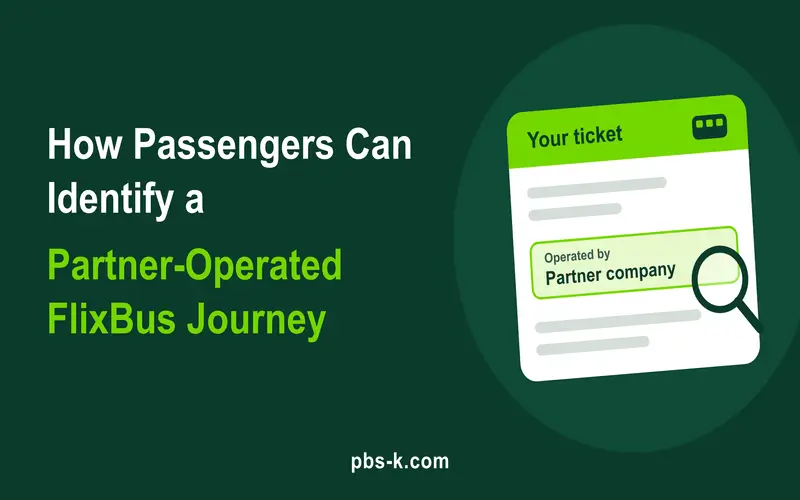
The partnership model is also relevant to passengers. A journey booked through FlixBus may be physically operated by an external bus company.
FlixBus provides guidance on identifying these services during the booking process and on the ticket.
Passengers can take the following steps:
- Search for the journey on the FlixBus website or app.
- Open the trip details before completing the booking.
- Look for information identifying an external operating partner.
- Review the final booking summary and ticket for the operator’s name and travel details.
- Read the applicable travel policies if the service is operated by a partner.
FlixBus explains that the partner’s identity may appear in the booking flow and that partner-operated rides may have different travel policies. Source: FlixBus passenger information.
Checking the operating company is particularly useful if you need to understand a service-specific rule or contact the appropriate provider about your journey.
Is FlixBus the Same as a Traditional Bus Company?
FlixBus and a traditional bus operator can both be involved in providing intercity travel, but their roles may differ.
| Area | FlixBus platform and network | Partner bus operator |
|---|---|---|
| Customer-facing brand | Presents journeys through its platform | May operate the physical service under the partnership |
| Online sales | Provides booking and ticketing technology | Supplies transport capacity for the service |
| Network planning | Coordinates network and commercial planning | Provides operational input and delivers assigned journeys |
| Vehicles | Does not necessarily own the buses used | May supply and maintain the vehicles |
| Drivers | Responsibilities depend on the service arrangement | May employ and manage drivers |
| Revenue | Governed by the commercial agreement | Compensation depends on the agreement |
| Safety | Sets or coordinates applicable partner standards | Must meet relevant legal and contractual requirements |
This is a general comparison, not a universal description of every service. Flix’s corporate group includes different brands and arrangements, and individual contracts may allocate responsibilities differently.
What Should a Bus Company Ask Before Partnering?
A business owner should evaluate the partnership using practical operational and financial questions rather than focusing only on the potential number of passengers.
Before agreeing to work together, clarify:
- Commercial terms: How will compensation, ticket revenue, and payment timing work?
- Route selection: Who decides which routes the company operates?
- Pricing: Who sets fares and manages pricing changes?
- Fleet requirements: What vehicle types, ages, equipment, and branding are acceptable?
- Staffing: Who employs the drivers and manages their schedules?
- Safety: Which inspections, standards, and reporting procedures apply?
- Customer service: Who handles complaints, refunds, missed connections, and disruption notices?
- Insurance and liability: Which party is responsible for particular risks?
- Performance: How will punctuality, service quality, and other obligations be measured?
- Exit conditions: What notice periods and termination rules apply?
These questions help reveal the actual business implications of the proposed arrangement. Written terms are more useful than relying on general descriptions of potential partnership benefits.
Conclusion
FlixBus works with independent bus operators by combining its brand, booking technology, marketing, pricing, and network planning with the transportation services provided by partner companies.
The model allows operators to explore access to new customers and digital sales channels, while Flix can expand its network without relying entirely on vehicles it owns itself. However, the benefits and responsibilities depend on the specific contract, route, and market.
Bus companies interested in collaboration should begin with the official regional partnership page, prepare information about their fleet and operations, and request clear details about commercial terms, safety requirements, and operating responsibilities before making a commitment.
FAQs
How does FlixBus work with bus operators?
FlixBus collaborates with independent transport companies that provide vehicles and operate journeys. Flix contributes the digital platform and commercial capabilities used to connect passengers with services.
Does FlixBus own all its buses?
No. Flix uses an asset-light business model that includes vehicles owned and operated by independent bus partners. Specific ownership arrangements can vary.
How do bus operators earn money from FlixBus?
Their compensation depends on the commercial agreement. Operators should confirm how revenue is calculated, which costs they must cover, and when payments are settled.
How can a bus company become a FlixBus partner?
A company can start by visiting the official FlixBus bus partnership page and contacting the appropriate regional team. Availability and requirements vary by market.
Who sets FlixBus ticket prices?
Flix identifies pricing as one of the functions supported by its platform. The exact decision-making arrangements and contractual responsibilities depend on the partnership and market.
Who is responsible for bus drivers and vehicle maintenance?
These responsibilities depend on the service structure and contract. Partner operators may supply vehicles, employ drivers, and manage maintenance, while also complying with applicable laws and additional contractual standards.
Are all FlixBus journeys operated by the same company?
No. Some journeys are operated by external partners. Passengers can check the booking details and ticket to identify the operator where this information is provided.
Can small bus companies work with FlixBus?
Flix actively describes cooperation with regional bus partners, including smaller and traditional transport businesses. However, eligibility, capacity requirements, and available opportunities must be confirmed with the relevant regional team.
Do FlixBus partners get guaranteed passengers?
A partnership can provide access to a larger customer base, but it does not automatically guarantee a particular number of bookings or a specific profit. Demand depends on factors such as route, price, schedule, competition, and seasonality.
Does every FlixBus partnership follow the same rules?
No. Commercial terms, operating responsibilities, regulatory requirements, and customer policies can vary by country, service, and contract. Both parties should confirm the relevant terms before launching a route.